
Market Movers. Reliability first, then a very loud demonstration.
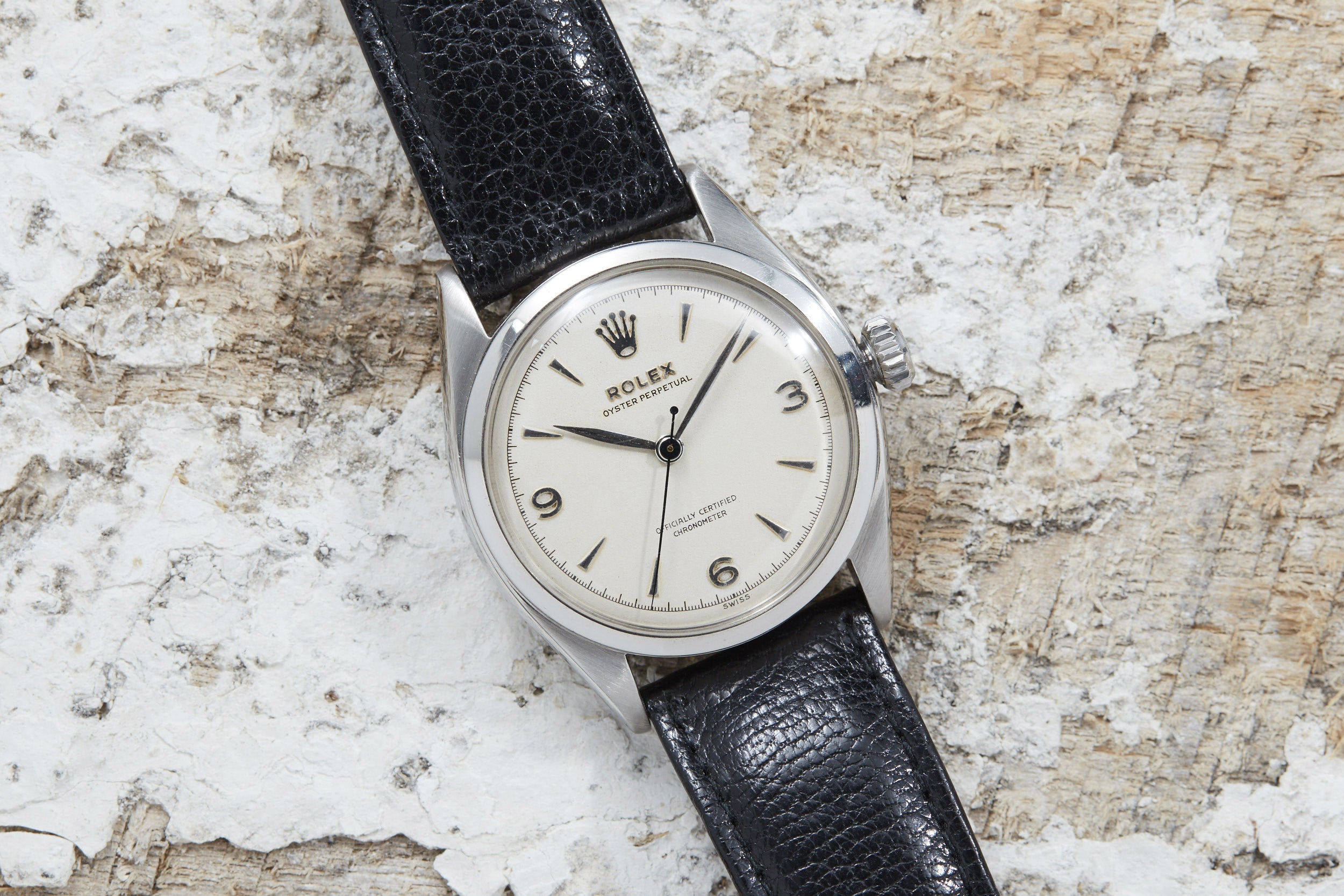
Rolex’s founder Hans Wilsdorf was not a watchmaker, and his genius was spotting what a wristwatch needed to be trusted. In 1926 he gave it a sealed case, and then spent heavily making sure the world knew.
The invention
Wilsdorf’s first target was precision. In 1910 a Rolex wristwatch obtained a chronometer certificate from the Official Watch Rating Centre in Bienne, proof, in Rolex’s words, that a wristwatch could be as precise as the pocket watch that was then the benchmark.
The Oyster of 1926 is Rolex’s founding product: a wristwatch whose case, with screw-down bezel, back and crown, sealed out water and dust. It was not a one-shot idea. One account counts at least four earlier attempts at a waterproof case, with the name Oyster registered in Switzerland on 29 July 1926 and in London two months later. Wilsdorf’s line for it was that, like an oyster, it could stay under water indefinitely without harm to its parts.
Rolex then added self-winding. The Perpetual rotor of 1931 made the Oyster Perpetual, and the system underlies almost every modern automatic watch. The Datejust of 1945 became the first self-winding wristwatch to show the date in a window on the dial.
How customers reacted
Rolex’s response to scepticism was to demonstrate. In 1927 the English swimmer Mercedes Gleitze carried an Oyster during a long swim, and on 24 November Rolex filled the front page of the Daily Mail with an advertisement for the “Wonder Watch That Defies the Elements”. Rolex calls her its first testimonial. Accounts of the swim differ: Rolex and a dealer’s history describe a Channel crossing of more than 15 hours, while at least one historian says the Oyster swim was a later attempt she did not complete, though the watch kept running. What is not in dispute is the advertising effort: one account says Rolex spent more than 1.2 million Swiss francs on the Oyster campaign.
The pattern repeated. The 1933 Everest flight expedition wore Oysters, and in 1935 land-speed record holder Sir Malcolm Campbell said his Rolex stayed accurate in harsh conditions. Shop windows later displayed Oysters in fish tanks to show the case in action.
How it evolved
Rolex kept patenting improvements to the case, seven in under ten years of the Oyster’s launch, according to one account. Later it layered purpose-built tool watches over the same case, among them the Submariner of 1953 and the GMT-Master of 1954, and kept the designs stable for decades. That consistency, plus testimonials and sponsorship, is the template for building a luxury watch brand without constant novelty.
Key facts
| Chronometer certificate | 1910, Official Watch Rating Centre, Bienne |
| Oyster | 1926; name registered 29 July 1926 (Switzerland) |
| Gleitze advertisement | Daily Mail front page, 24 November 1927 |
| Perpetual rotor | 1931 |
| Everest flight expedition | 1933, watches worn by the team |
| Datejust | 1945; first self-winding with date on the dial |
| Tool watches | Submariner 1953; GMT-Master 1954 |
Buying guide – Rolex Oyster Perpetual 36
| Price (US) | USD 6,750 (2026 list price, before sales tax) |
| Price (India) | ₹6,22,800 (January 2026 India list price) |
| If you import it | USD 6,750 is about ₹6.41 lakh at roughly ₹95 to the dollar. Customs adds about 49.15% (20% basic duty, 4% additional duty, a surcharge on those, then 18% IGST), so the landed cost is about ₹9.56 lakh before shipping and insurance |
| What that means | Buying from an authorised retailer in India, at ₹6,22,800, costs far less than importing one |
| Availability | Authorised retailers only; supply varies by model and dial |
| Buy | rolex.com/en-in (brand site; use it to find an authorised Indian retailer) |
Sources: Rolex, “Oyster Story” (rolex.com); Analog:Shift; Quality Tyme on the Gleitze swim; The Hour Markers (India list prices, January 2026); Time and Watches and Luxury Bazaar (US list price); customs rates from India’s customs tariff via EximPe. Exchange rate approximate; duty estimate ignores shipping, insurance and any import licence. The Submariner and GMT dates are as commonly reported and not independently verified. Image: a dealer photograph of an early-1950s Oyster Perpetual ref. 6084 by Analog:Shift; no Rolex media kit was available to us.

