
Technical Pioneers. From the Perpétuelle to the tourbillon, one Paris workshop wrote the rulebook.
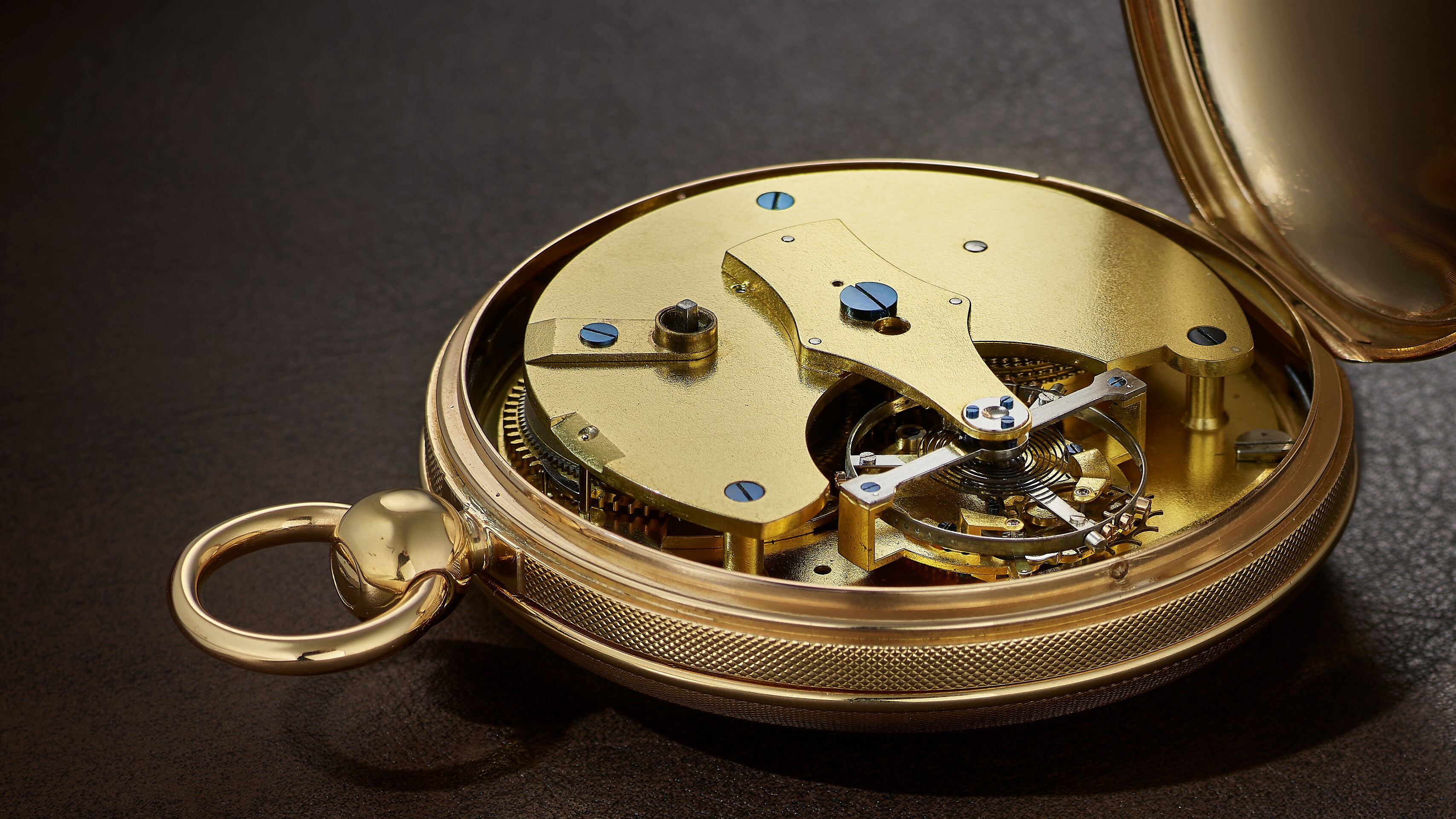
Abraham-Louis Breguet was born in Neuchâtel in 1747 and made his name in Paris, where he opened his own workshop on the Île de la Cité in 1775. By the time he died in 1823 he had either invented or perfected much of what a fine mechanical watch still relies on.
The inventions
The first to make his name was the Perpétuelle, a self-winding pocket watch. Others had experimented with automatic winding before him, and Abraham-Louis Perrelet is usually credited with the original idea, but Breguet refined it into a watch people actually wanted. He went on to add the gong spring that gave repeaters their clear chime, the pare-chute shock protection for the balance pivots, the overcoil balance spring, a watch that could be read by touch, and the Sympathique clock that set a watch placed on top of it.
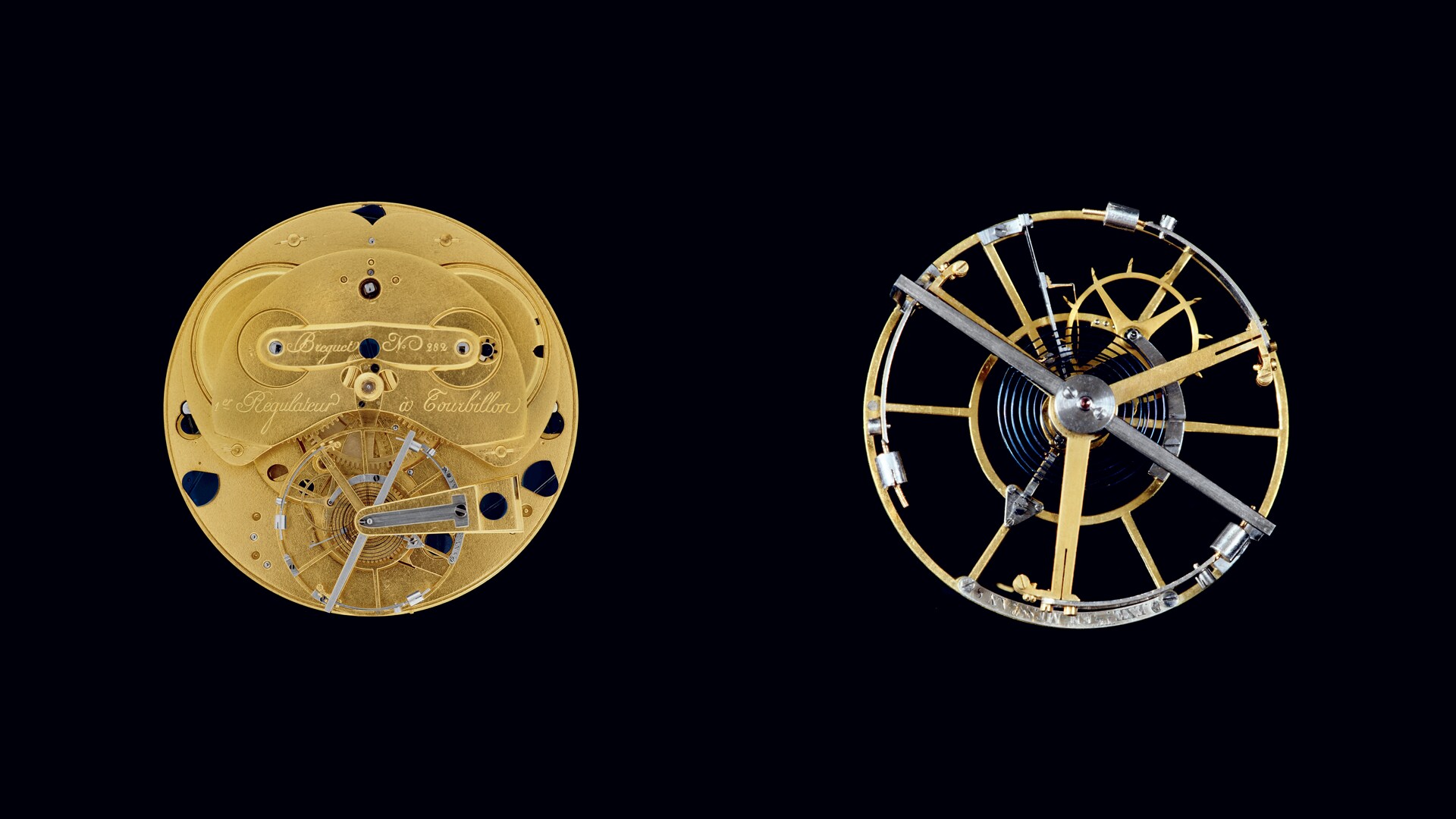
His most famous idea came last. Pocket watches spent most of their lives upright in a waistcoat, where gravity pulled the balance in a way that spoiled the rate. The answer, which he patented on 26 June 1801, was to mount the balance and escapement in a small rotating carriage so the errors would average out. He called it the tourbillon, using the old word for a whirling system of planets rather than a storm.
The early models
The Perpétuelle is where the reputation began. Breguet’s most famous commission, No. 160, known as the Marie-Antoinette, was ordered in 1783 and only completed in 1827, four years after his death. The tourbillon moved far more slowly. Breguet’s house counts 40 produced between 1796 and 1829, each taking years to make and adjust. The first known example, No. 282, was begun in 1796 and not sold until 1832.
How customers reacted
The Perpétuelle enchanted Louis XVI and Marie-Antoinette and then the court at Versailles, and Breguet’s name travelled to every major capital. So many tried to copy him that imitation became a problem of its own. The tourbillon found a different audience. Breguet’s own account is that about a quarter of the 40 went to sailors and shipowners for navigation, and others to scientists, because buyers who understood precision valued it. Among the clients were George III and George IV of England, Ferdinand VII of Spain and aristocrats across Europe.
It was not a commercial triumph. Simple silver-cased models sold for around 2,000 francs and complicated gold ones for 3,000 to 5,000, and the house itself admits the tourbillon did not repay its maker’s effort. It took more than a decade to make the invention reliable, and a further six years from the patent to the first sales.
How it evolved
The patent lasted only ten years, so others could build on it. In the 19th century Bahne Bonniksen developed the karussel from Breguet’s observations, and the idea spread to other makers. Breguet itself made a tourbillon travel clock for Tsar Alexander III in 1890 and new tourbillon pocket watches that sold from the 1920s into the 1950s. The real revival came in the mid-1980s, when the tourbillon moved into wristwatches. Gravity matters far less on a wrist, so the complication is now admired mainly as mechanical art, which is almost the reverse of why it was invented.
Key facts
| Who | Abraham-Louis Breguet (1747 to 1823), born Neuchâtel, worked in Paris |
| Own workshop | 1775, Île de la Cité |
| Tourbillon patent | 26 June 1801, valid for ten years |
| Tourbillons made | 40 between 1796 and 1829; first known, No. 282 |
| Other inventions | Perpétuelle, repeater gong spring, pare-chute, overcoil, à tact watch, Sympathique clock |
| Wristwatch revival | Mid-1980s |
Sources: Breguet, “The tourbillons of the inventor” (Quai de l’Horloge magazine); Swatch Group archive; WorldTempus; WatchTime; Worn & Wound. Production figures and the customer account are Breguet’s own. Images courtesy of Breguet, from its website; no media kit was available to us.

