
Technical Pioneers. A jeweller’s answer to a pilot’s problem.
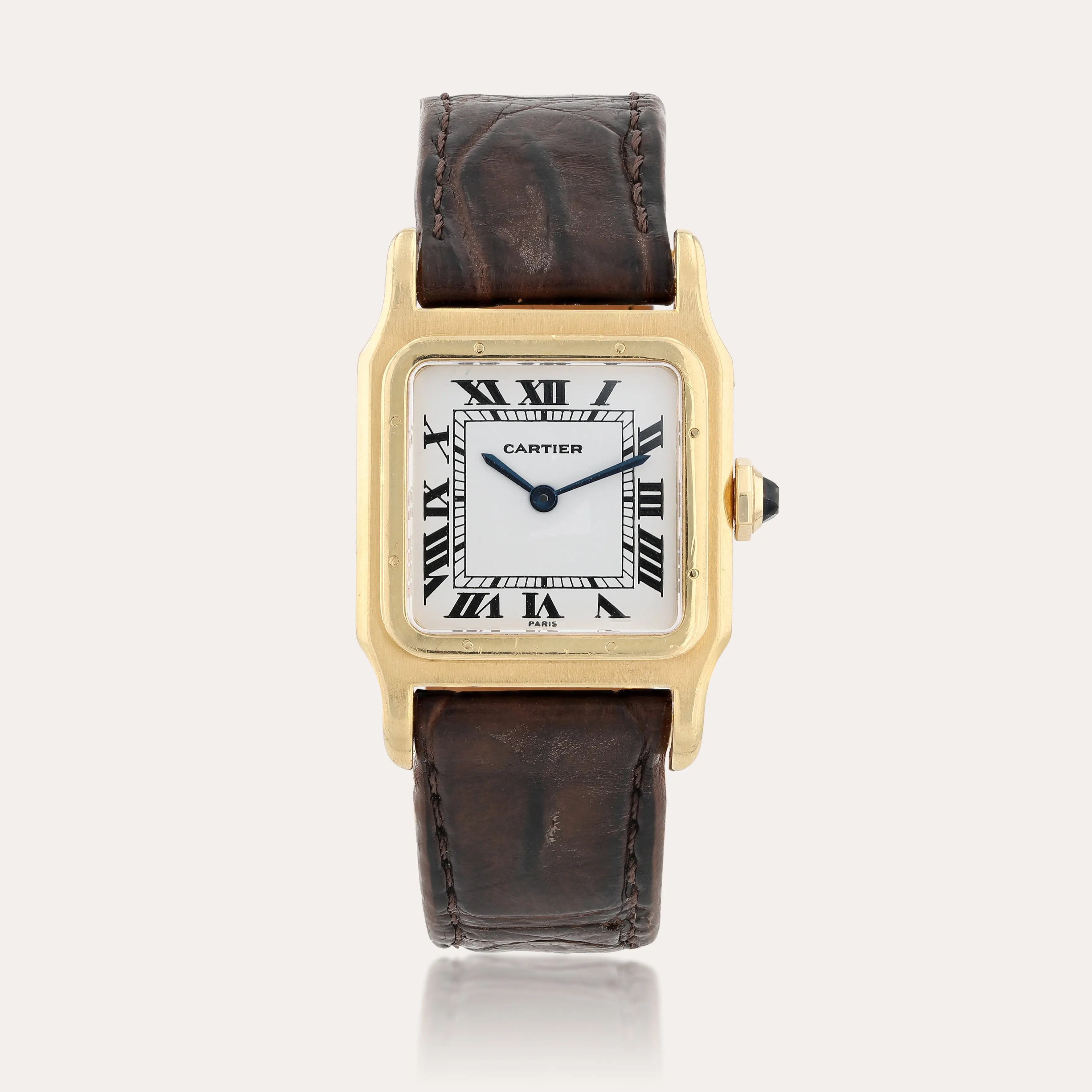
Cartier’s contribution to watchmaking is less about a movement than about a shape. Its Santos and Tank designed the wristwatch as a whole object, at a time when many men still thought of watches as something that lived in a pocket.
The problem
The Brazilian aviator Alberto Santos-Dumont, who had moved to France to build balloons, airships and early aircraft, complained to his friend Louis Cartier in the early 1900s that a pocket watch was impractical in the air. Cartier’s answer, given to him in 1904 according to retailers’ accounts of the story, was a flat watch worn on the wrist, which was a novel idea at the time.
The invention
The Santos was built around a square bezel with exposed screws, a Roman-numeral dial and blued steel hands. It was an engineering decision as much as a look: the case, lugs and strap were designed together so the watch sat flat and read at a glance. Cartier revisited the 1904 prototype around 1908 and put it on sale in 1911, which is why it is often called one of the first modern wristwatches and possibly the first pilot’s watch. That is a widely repeated claim rather than something we can prove.
The Tank followed. Cartier presents it as designed in 1917 and sold from 1919, with a rectangular case whose sides and lugs read as one form, inspired by the Renault tanks of the First World War seen from above.
How customers reacted
Direct testimony from the first buyers is thin. What is recorded is that the Santos challenged conservative French taste, and that it took several years from prototype to a watch customers could buy. The Santos-Dumont then found a second audience later: one was on Yves Saint Laurent’s wrist in a 1971 Horst P. Horst photograph for Vogue, according to a dealer’s listing.
How it evolved
Cartier has made dozens of Santos models since 1911, including manual, automatic and quartz versions and complicated references. The Tank has been reinterpreted in many forms, and its clean rectangle is one of the most recognised watch shapes in the world. The brand has no claim to modern movement breakthroughs. Its legacy is the idea that how a watch looks and fits is part of how it works.
Key facts
| Santos | Made for Alberto Santos-Dumont in 1904; revisited about 1908; on sale 1911 |
| Design | Square bezel with exposed screws; Roman numerals; blued steel hands |
| Tank | Designed 1917; sold from 1919 (Cartier’s account) |
| Technical contribution | The wristwatch designed as one object: case, lugs and strap together |
Buying guide – Cartier Tank Must (large model)
| Price (US) | USD 3,900 for the large steel model on a strap (2026 US retail after Cartier’s May increase; the large SolarBeat on a bracelet is USD 4,400) |
| Price (India) | An Indian retailer’s guide puts Tank Must models at roughly ₹3.5 lakh and up (₹3,51,000 for a small-size reference); ask for the large model’s current price |
| If you import it | USD 3,900 is about ₹3.71 lakh at roughly ₹95 to the dollar. Customs adds about 49.15% (20% basic duty, 4% additional duty, a surcharge on those, then 18% IGST), so the landed cost is about ₹5.53 lakh before shipping and insurance |
| Availability | Permanent collection; sold through Cartier boutiques and authorised retailers |
| Buy | cartier.com (brand site) – Kapoor Watch (Indian retailer guide to entry-level Cartier) |
Sources: Analog:Shift and EveryWatch on the Santos-Dumont; Cartier’s published history for the Tank; WatchScanning and Luxury Bazaar (2026 US prices); Kapoor Watch (Indian price indication); customs rates from India’s customs tariff via EximPe. Exchange rate approximate; the duty estimate ignores shipping and insurance. The Tank dates and the Renault inspiration are as presented by Cartier and we have not verified them independently. Image: a dealer photograph of a c. 1970 Santos-Dumont ref. 78097 via EveryWatch, not the 1904 original; no Cartier media kit was available to us.

