
Market Movers. A watch for people who had never owned one.
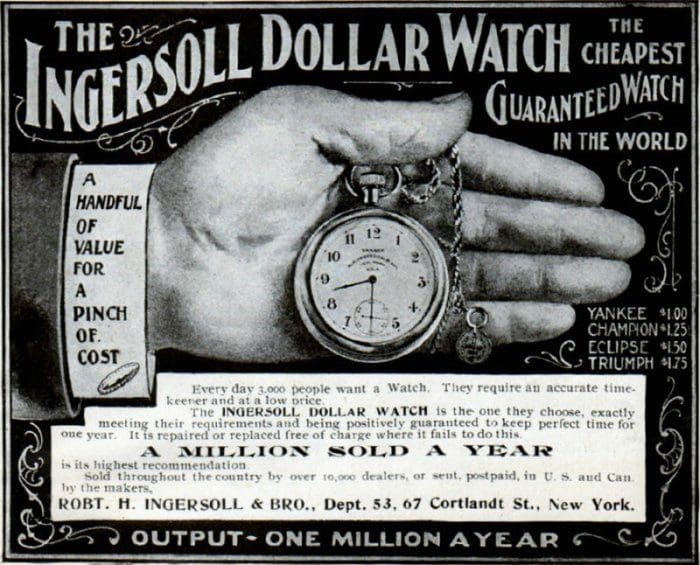
Timex did not invent a movement. It changed who could own a watch, and then persuaded them to trust it. The company began in 1854 as the Waterbury Clock Company in Connecticut, and its story is a sequence of cheap, tough products sold in huge numbers.
The idea
Waterbury Clock built an early reputation making affordable American clocks. Its sister firm Waterbury Watch produced the first inexpensive mechanical pocket watch in 1880. The company then supplied watches to the Ingersoll brothers, and by 1896 the Ingersoll Yankee sold for a single dollar, earning the line “the watch that made the dollar famous”.
The early models
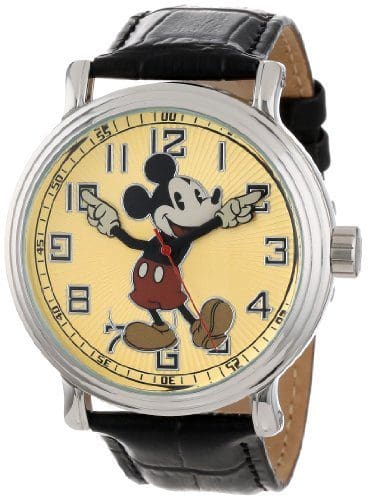
The Yankee was followed in 1933 by licensed Mickey Mouse watches, unveiled at the Chicago World’s Fair under a Walt Disney licence. They became the company’s first million-dollar line and are credited with rescuing it from the Depression, and the factory rehired workers. After the Second World War, in which it made military timepieces, the company launched a wristwatch simply called the Timex in 1950.
How customers reacted
Buyers responded to proof. In the late 1950s Timex hired John Cameron Swayze, then regarded as America’s most credible newsman, to front live “torture tests” on television: strapped to an outboard motor, dropped over the Grand Coulee Dam, frozen, and more. The slogan, “Takes a licking and keeps on ticking”, did the rest, and sales took off. Viewers wrote in with their own suggestions, and the brand notoriously failed only a few, one being an elephant stepping on a watch.
How it evolved
The company became Timex Corporation and then the Timex Group, and says it has sold over a billion watches. Indiglo, an electroluminescent night-light dial, arrived in the Ironman line in 1992. Timex also became part of Indian watch history when Titan launched Sonata and Fastrack in a bid to compete with it.
Why it matters: Timex proved that trust, distribution and plain marketing could build a global watch brand without horological prestige. That is the formula every affordable watch brand since has followed.
Key facts
| Founded | 1854, Waterbury Clock Company, Connecticut |
| Dollar watch | Ingersoll Yankee, 1896 |
| Mickey Mouse watches | 1933, Chicago World’s Fair |
| Timex wristwatch | 1950 |
| Torture-test ads | Late 1950s, with John Cameron Swayze |
| Indiglo | 1992, Ironman line |
Buying guide – Timex Marlin Automatic 40 mm
| Watch | 40 mm stainless steel – 21-jewel Japanese automatic, about 40 hours of reserve – domed acrylic crystal – leather strap |
| Price (US) | USD 299 on timex.com (before sales tax) |
| Price (India) | ₹20,995 list price on Just In Time, listed there at ₹16,796 after a 20% discount (taxes included; black dial reference TW2W93200UJ) |
| If you import it | USD 299 is about ₹28,400 at roughly ₹95 to the dollar. Customs adds about 49.15% (20% basic duty, 4% additional duty, a surcharge on those, then 18% IGST), so the landed cost is about ₹42,400 before shipping |
| What that means | Buying in India costs well under half the imported price |
| Buy | Just In Time (India) – timex.com (brand, US) |
Sources: Connecticut Explored; Wikipedia’s Timex entry; We Are the Mighty; Timex corporate summaries; timex.com and Just In Time product listings (checked 21 October 2026); customs rates from India’s customs tariff via EximPe. Exchange rate approximate; the duty estimate ignores shipping and insurance. The US and Indian models are the same Marlin Automatic family but not necessarily the same dial. Images: Jamais Vulgaire’s history of Timex, matched by file name to the Ingersoll Yankee and the Mickey Mouse watch; no Timex media kit was available to us.

